

How to treat acne in skin of color
For people with skin of color, acne is often accompanied by dark spots or patches called hyperpigmentation. Fortunately, there are plenty of things people with skin of color can do at home to help clear their acne, as well as the dark spots that linger afterwards.
The phrase “skin of color” represents a wide range of complexions and ethnic backgrounds, including individuals of African, Asian, Latino, Mediterranean, Middle Eastern, and Native American descent.
People who have skin of color often share certain skincare concerns — one of the most common being how to manage acne and the dark spots that appear once pimples heal.
The key to achieving clearer, more even-toned skin lies in understanding what truly works for darker skin types — and what can make things worse.
Below are 10 expert-approved tips supported by dermatologic research to help you get healthier, clearer skin.
1. Treat Acne and Dark Spots at the Same Time
Many people seek treatment for dark marks that remain long after acne disappears, but focusing only on pigmentation can overlook the main cause.
Dermatologists emphasize the importance of addressing both acne and dark spots together. When you treat active breakouts, you prevent new discoloration from forming, allowing your skin tone to gradually even out.
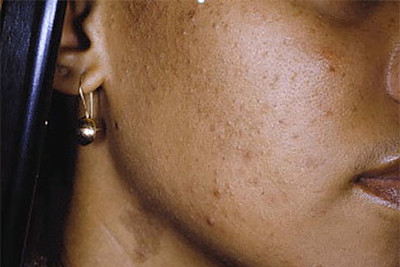
Acne and dark spots
Dermatologists recommend treating acne and dark spots at the same time.
2. Start Treating Acne Early to Avoid Scarring
Scientific studies show that early intervention can stop acne from worsening.
If acne becomes moderate or severe before treatment begins, people with darker skin tones are more likely to develop post-inflammatory hyperpigmentation (dark patches) or even keloid scars.
The sooner you start treating acne, the lower your risk of long-term marks and textural changes.
3. Choose Acne Treatments Suitable for Skin of Color
Not every acne product is ideal for melanin-rich skin. Dermatologists recommend looking for products that include:
-
A retinoid and benzoyl peroxide: This combination helps reduce inflammation, unclog pores, and prevent future breakouts. Retinoids clear blackheads and whiteheads, while benzoyl peroxide eliminates acne-causing bacteria.
If you’re concerned that benzoyl peroxide might lighten your skin — it won’t. That’s a myth. It may, however, bleach fabrics, so use it carefully.
Start with a 2.5% benzoyl peroxide formula to minimize irritation, and use it every other day if dryness occurs.
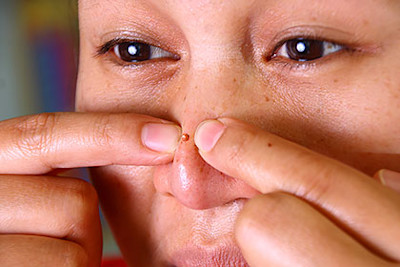
Do not pop pimples
If you pick, pop, or squeeze acne, you increase your risk of getting a scar.
-
Salicylic acid: This exfoliating agent keeps pores clear and helps reduce new breakouts.
-
Retinol or adapalene (Differin 0.1% gel): Both unclog pores and help fade dark spots. Adapalene is an FDA-approved, over-the-counter retinoid that works safely on skin of color.
Avoid popping or squeezing pimples, as this increases the risk of dark marks and permanent scarring.
4. Identify Acne Caused by Hair Products
If acne appears mainly on your forehead and temples, hair oils or pomades may be the culprit — a condition known as pomade acne.
You can reduce breakouts by:
-
Switching to water- or glycerin-based hair products instead of oils.
-
Applying oils only to the middle and ends of your hair, not near the scalp or forehead.
-
Stopping use of heavy products if breakouts continue.
5. Avoid Skincare That Clogs Pores
Some moisturizing or brightening products, especially those containing cocoa butter or shea butter, can block pores and trigger acne.
To avoid this, choose items labeled “non-comedogenic” or “won’t clog pores.”
While cocoa butter is often believed to even skin tone, there’s no scientific evidence to support that claim — and it can actually worsen acne.
6. Replace Heavy Makeup With Non-Comedogenic Alternatives
Thick, oil-based makeup can trap bacteria and oil, leading to new blemishes.
If you prefer coverage, opt for mineral makeup or formulations labeled non-comedogenic. These provide good coverage without suffocating your pores or aggravating dark spots.
7. Be Gentle With Your Skin
Scrubbing your face, popping pimples, or using strong soaps won’t make acne disappear faster — they’ll only irritate your skin and worsen inflammation.
Instead, dermatologists recommend:
-
Cleansing with a mild, non-comedogenic face wash.
-
Using only your fingertips to apply and rinse cleanser.
-
Patting your skin dry gently with a clean towel.
Gentle skincare helps preserve your skin barrier and promotes faster healing.
8. Wash Hats, Caps, and Headwear Frequently
Unwashed hats or headbands can accumulate oil, sweat, and bacteria, which may contribute to breakouts around your hairline or forehead.
Regularly washing or dry-cleaning these items helps reduce flare-ups.
9. Consult a Dermatologist Before Trying Chemical Peels or Laser Treatments
People with richly pigmented skin must be cautious with chemical peels, microdermabrasion, or laser therapies.
Even at-home versions can cause long-lasting dark or light patches if not used correctly.
When performed by an experienced dermatologist who regularly treats skin of color, these procedures can safely improve acne and discoloration.
Always ask how many patients with skin of color your doctor has treated before proceeding.
10. Seek Professional Help When Needed
Almost every case of acne and most dark spots can be treated successfully with the help of a board-certified dermatologist.
Some people may need prescription-strength medicine, while others respond well to a customized combination of treatments.
A dermatologist can assess your unique skin type and design a plan that minimizes irritation while targeting both acne and pigmentation.
Bottom Line:
Clearer, more even-toned skin is absolutely achievable for people with skin of color. The key is using gentle, evidence-based skincare — and knowing when to get professional guidance.
Try incorporating these dermatologist-approved strategies into your routine and give them time to work. The science shows that they truly can make a difference.


0 Comments